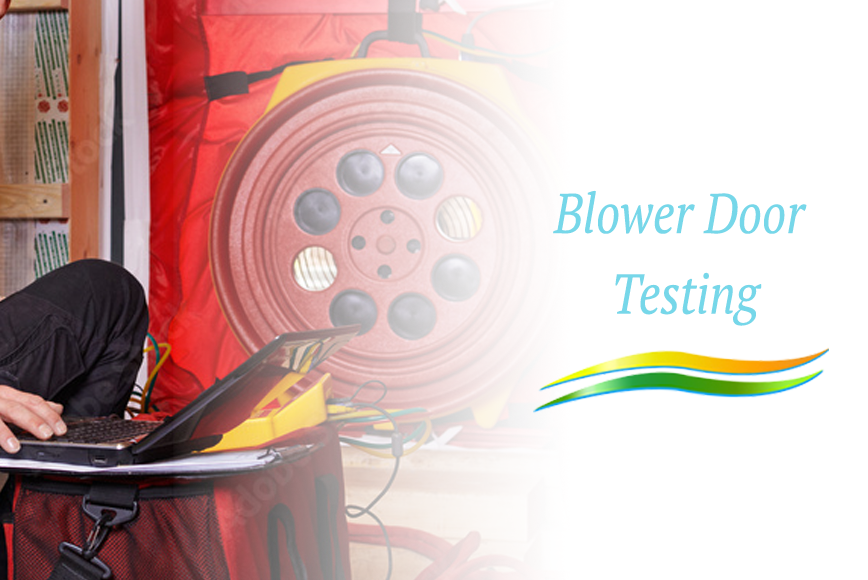
Blower Door Testing
Have you ever felt pesky drafts around your home or higher than normal humidity issues. Drafts and air leakage can be a concern for a lot of homeowners. It’s especially frustrating when your heating or cooling bills skyrocket in the middle of the most intense seasons. The most effective way to determine the location and extent of the air leakage is a blower door test.
So what is a blower door test?
The blower door test measures the air tightness of the building by depressurizing it and measuring the rate at which air infiltrates through imperfections in the building envelope. The test involves:
- Closing off or sealing all exterior openings
- Activating a powerful, variable-speed fan to blow air out of the house
- Measuring the higher outside air pressure that flows in through any unsealed cracks or openings
- The test can help determine the level of air leakage and the exact sources causing the air leaks
Whether you’re looking to reduce your heating and cooling bills, you want a more comfortable home throughout all the seasons, or you want a more energy efficient home, a blower door test is truly a small investment to make. The information provided by a blower door test is absolutely invaluable. A blower door test is the most effective tool for pinpointing areas of your home that could see improvement, and will provide you with a roadmap to get there!
What does a blower door test measure?
A blower door test measures how airtight your home is. Your home’s air tightness plays a major role in the overall energy efficiency of your home! During a blower door test, your Registered Energy Advisor will run a fan that sits in the main exterior door frame of your home. The fan draws air from the inside of your home to the outside. The air then rushes back into the home through any cracks, gaps, or leaks. As the fan is running, your energy advisor will collect data from the pressure gauge that is used to calculate the airtightness of your home.
After the blower door test has been conducted, your Registered Energy Advisor will provide you with a list of recommended upgrades for your home. The list of recommended upgrades will outline how much your home could improve, should you wish to complete those renovations!
What numbers are required for what (Building Code, Net Zero, Passive House, Building Code, a home built to today’s standards would test at less than 2.5-3.5 ACH (Air Changes per Hour is a measurement of how many times the inside (conditioned) air is replaced with outside (unconditioned) air at a certain pressure. In most cases, ACH is read using 50 pascals of pressure. In other words, a home that has tests 1.0 ACH50 would see its total volume of air exchanged with outdoor air once every hour at 50 pascals of pressure.
A net zero home is up to 80% more efficient than a conventional home! As such, a net zero home must be exceptionally airtight to maintain its level of efficiency. In order to meet net zero. In most cases they may require outside fresh air or a foam of dehumidication.
A passive house is a home that is even more efficient than a net zero home. A passive house must meet strict air sealing requirements of 0.7 ACH at 50 pascals pressure. A passive house has extreme insulation levels and a completely airtight building envelope.
What is the average blower door test result?
The average blower door test result depends largely upon the age of the home, the insulation levels, and the age of the windows and doors. Generally, a new home should test less than 3.5 ACH50, as the insulation levels and efficiency of the windows/doors would make for a fairly airtight home. An older home, however, can vary immensely depending on a number of the aforementioned factors. If an older home is lacking in insulation and has inefficient windows, it can test anywhere from 5 ACH50 and up. A home that is very leaky would likely test somewhere around 10-20 ACH50.
How long does a blower door test take?
A blower door test will vary based on the size of the home. Generally, a blower door test, when combined with a whole home energy audit, should take approximately 1-4 hours.
The blower door test itself can run for about 2 hours. You may want to walk around your home with your energy advisor as the test is running! It’s a great way to physically feel the movement in the air and pinpoint exactly where the leakage is coming from.
What about fresh air?
While having an airtight home is integral to an overall energy efficient home, it’s important to remember that for indoor air quality, you must have fresh air circulating throughout your home. Think of it like the human body, without sufficient fresh air, your home isn’t able to breathe. It’s like trying to breathe through your skin rather than your mouth.
Reducing air infiltration and lowering the humidity inside your home will help lower your monthly energy bills and offer you more comfort.
www.airconceptsllc.com
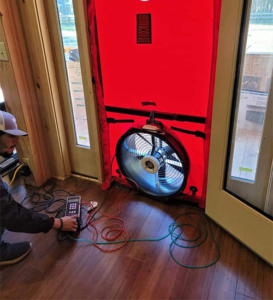
Preparing for a Blower Door Test
- Take the following steps to prepare your home for a blower door test:
- Close windows and open interior doors
- Turn down the thermostats on heaters and water heaters
- Cover ashes in wood stoves and fireplaces with damp newspapers
- Shut fireplace dampers, fireplace doors, and wood stove air intakes
- Please call us today to help you resolve any energy leakage…